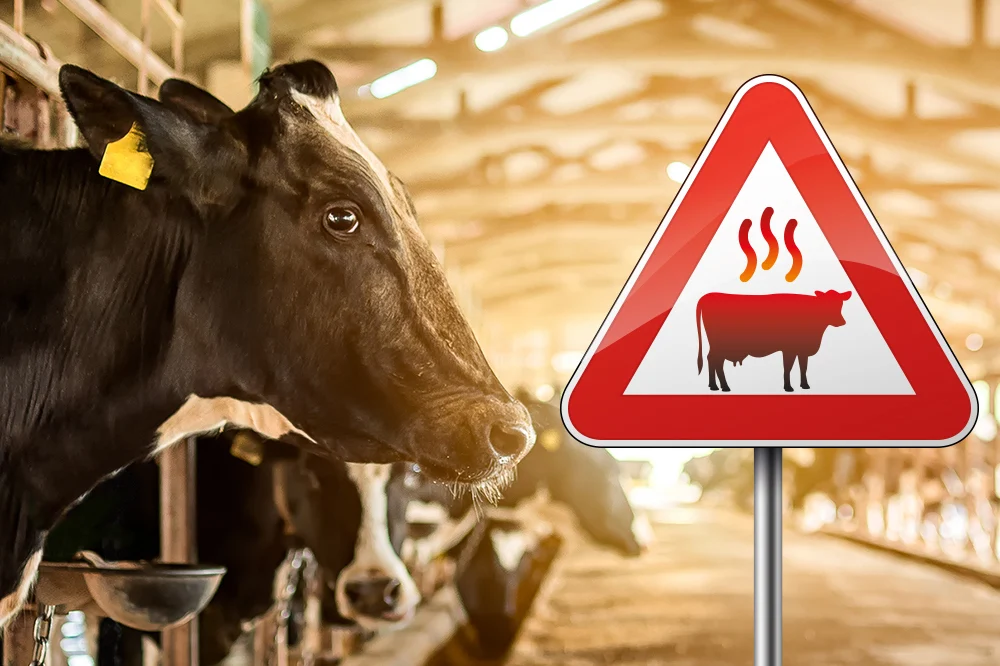
Heat stress affects dairy cattle more deeply than many farmers realize. Its impact is often gradual and silent, but it can reduce performance in several ways at once. When temperatures rise beyond the animal’s comfort level, cattle begin to use more energy trying to cool themselves instead of using that energy for milk production, body condition, and overall performance.
One of the first effects of heat stress is reduced feed intake. As cattle eat less, nutrient intake drops, digestion becomes less efficient, and milk yield may begin to decline. At the same time, cattle may show signs of discomfort such as faster breathing, more standing time, lower activity, and reduced appetite. Even if the drop in performance seems small at first, continuous heat stress can create a noticeable impact over time.
Heat stress also affects rumen function, hydration, immunity, and reproductive efficiency. It can increase nutritional stress, make cattle more vulnerable to health issues, and reduce how effectively they utilize feed. In high-producing dairy cattle, this becomes even more important because their nutritional demands are already high.
Managing heat stress requires more than just shade. Good ventilation, clean water access, feeding strategies, and proper nutritional support all play a major role in helping cattle stay comfortable and productive. When heat stress is controlled properly, cattle remain healthier, feed intake improves, and dairy performance becomes more stable even during challenging weather conditions.